|
|
What to see in Italy
Historic Centre of Florence
City and Province of Florence, Tuscany
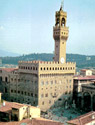
Built on the site of an Etruscan settlement, Florence, the symbol of the Renaissance, rose to economic and cultural pre-eminence under the Medici in the 15th and 16th centuries. Its 600 years of extraordinary artistic activity can be seen above all in the 13th-century cathedral (Santa Maria del Fiore), the Church of Santa Croce, the Uffizi and the Pitti Palace, the work of great masters such as Giotto, Brunelleschi, Botticelli and Michelangelo.
Historic Centre of Naples
City and Province of Naples, Campania
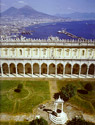
From the Neapolis founded by Greek settlers in 470 B.C. to the city of today, Naples has retained the imprint of the successive cultures that emerged in Europe and the Mediterranean basin. This makes it a unique site, with a wealth of outstanding monuments such as the Church of Santa Chiara and the Castel Nuovo.
Historic Centre of Rome, the Properties of the Holy See in that City Enjoying Extraterritorial Rights and San Paolo Fuori le Mura
Province of Roma, Lazio region (IT) / Vatican City State (VA)
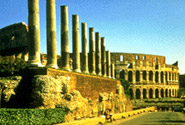
Founded, according to legend, by Romulus and Remus in 753 B.C., Rome was first the centre of the Roman Republic, then of the Roman Empire, and it became the capital of the Christian world in the 4th century. The World Heritage site, extended in 1990 to the walls of Urban VIII, includes some of the major monuments of antiquity such as the Forums, the Mausoleum of Augustus, the Mausoleum of Hadrian, the Pantheon, Trajan's Column and the Column of Marcus Aurelius, as well as the religious and public buildings of papal Rome.
Historic Centre of San Gimignano
Province of Siena, Tuscany
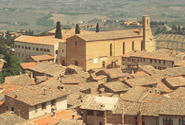
'San Gimignano delle belle Torri' is in Tuscany, 56 km south of Florence. It served as an important relay point for pilgrims travelling to or from Rome on the Via Francigena. The patrician families who controlled the town built around 72 tower-houses (some as high as 50 m) as symbols of their wealth and power. Although only 14 have survived, San Gimignano has retained its feudal atmosphere and appearance. The town also has several masterpieces of 14th- and 15th-century Italian art.
Historic Centre of Siena
City and Province of Siena, Tuscany
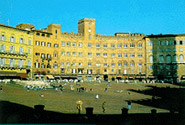
Siena is the embodiment of a medieval city. Its inhabitants pursued their rivalry with Florence right into the area of urban planning. Throughout the centuries, they preserved their city's Gothic appearance, acquired between the 12th and 15th centuries. During this period the work of Duccio, the Lorenzetti brothers and Simone Martini was to influence the course of Italian and, more broadly, European art. The whole city of Siena, built around the Piazza del Campo, was devised as a work of art that blends into the surrounding landscape.
Historic Centre of the City of Pienza
Province of Siena, Tuscany
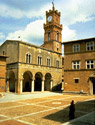
It was in this Tuscan town that Renaissance town-planning concepts were first put into practice after Pope Pius II decided, in 1459, to transform the look of his birthplace. He chose the architect Bernardo Rossellino, who applied the principles of his mentor, Leon Battista Alberti. This new vision of urban space was realized in the superb square known as Piazza Pio II and the buildings around it: the Piccolomini Palace, the Borgia Palace and the cathedral with its pure Renaissance exterior and an interior in the late Gothic style of south German churches.
Historic Centre of Urbino
Province of Pesaro, Marche Region
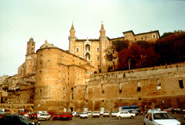
The small hill town of Urbino, in the Marche, experienced a great cultural flowering in the 15th century, attracting artists and scholars from all over Italy and beyond, and influencing cultural developments elsewhere in Europe. Owing to its economic and cultural stagnation from the 16th century onwards, it has preserved its Renaissance appearance to a remarkable extent.
I Sassi di Matera
City and Province of Matera, Region of Basilicata
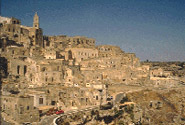
This is the most outstanding, intact example of a troglodyte settlement in the Mediterranean region, perfectly adapted to its terrain and ecosystem. The first inhabited zone dates from the Palaeolithic, while later settlements illustrate a number of significant stages in human history. Matera is in the southern region of Basilicata.
Late Baroque Towns of the Val di Noto (South-Eastern Sicily)
Provinces of Catania, Ragusa, and Syracuse, Sicily
The eight towns in south-eastern Sicily: Caltagirone, Militello Val di Catania, Catania, Modica, Noto, Palazzolo, Ragusa and Scicli, were all rebuilt after 1693 on or beside towns existing at the time of the earthquake which took place in that year. They represent a considerable collective undertaking, successfully carried out at a high level of architectural and artistic achievement. Keeping within the late Baroque style of the day, they also depict distinctive innovations in town planning and urban building.
Historic Centre of Lucca
To this day, the urban structure of the historic centre of Lucca clearly shows the transitions that indicate the various phases of the city's development.
The Roman imprint - Lucca was a Roman colony - is obvious in the regular street plan, in place-names such as San Michele al Foro (from Forum) and, most of all, in the very particular Piazza del Mercato, created at the beginning of the 19th century. The existing buildings, erected over the centuries on the ruins of the Roman amphitheatre, were pulled down and new ones built following the ancient monument's elliptical perimeter.
Under Lombard rule, Lucca became the capital of the marquisate of Tuscany and was a particularly important road junction for communications with the Northern regions. The transition from the Roman to the Lombard settlement brought no topographical discontinuity: all the main buildings were erected within the Roman city walls, in particular the curtis regia and the mint. Today, we have only documental data of these edifices but findings in several Lombard tombs (now preserved in the Museo Nazionale in Villa Guinigi) and traces of religious edifices support Lucca's importance during the Early Middle Ages.
During the 12th and 13th centuries, silk trade and banking activities induced a significant economical development and Lucca became an international trade centre with monetary and fiscal privileges. Prosperous economic conditions favoured a population increase and, consequently, the city's enlargement. In those years the city acquired a new structure, based on towers and tower houses, reserved to the richer families. Outside the city, East of the Roman settlement, several boroughs developed along the commercial ways, featuring lower buildings, gardens and parks.
Palermo and Monreale Cathedral
The entire historic district of Palermo can be considered a unique and exceptionally important urban fabric, which has survived the long succession of various rules to which the island was subjected over the centuries and that have left extensive primary evidence.
"All-port" is the translation of the ancient name of the city, Panormus, which was founded by the Phoenicians in the eighth century BC, never conquered by the Greeks, but won by the Romans in 254 BC. The city was constituted by two fortified nuclei, the older Paleopolis and the Neapolis, which occupied a rocky headland bounded by two rivers - long since disappeared - that flowed into the sea in a deep and sheltered natural harbour.
Palermo underwent great expansion beneath Arab rule (ninth-eleventh centuries) that made the island's chief city and one of the leading trading centres of the Mediterranean. The image handed down by the Arab chroniclers is that of a mythical Oriental city, brimming with mosques, sumptuous palaces and crowded markets packed with precious goods, comparable in size and splendour to Cordoba and Cairo, and it is claimed that it counted over 300,000 inhabitants.
Piazza del Duomo, Pisa
City and Province of Pisa, Tuscany
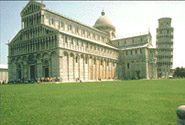
Standing in a large green expanse, Piazza del Duomo houses a group of monuments known the world over. These four masterpieces of medieval architecture – the cathedral, the baptistry, the campanile (the 'Leaning Tower') and the cemetery – had a great influence on monumental art in Italy from the 11th to the 14th century.
|
B&B Palazzo Antonelli Monopoli,
Casa d'Epoca Monopoli,
Trullo Carluccio Monopoli
La Casa Di Zia Lina Monsummano
Golf Hotel Corallo Montecatini Terme,
Hotel Giglio Montecatini Terme,
Hotel Michelangelo Montecatini Terme,
Park Hotel Moderno Montecatini Terme,
Villa la Reggia Montecatini Terme
La Miniera Montecatini Val di Cecina
Bella Veduta Bed & Breakfast Montelparo
Hotel Panoramic Montepulciano
Relais CastelBigozzi Monteriggioni
Villa San Pietro Montichiari
Lodole Country House Monzuno
6 small rooms Naples,
A-Kasa Naples,
Appartamento Spagnolo Naples,
Areamare Naples,
Art Suite Principe Umberto Naples,
B&B Bonapace Porta Nolana Naples,
B&B Chiaro di Luna Naples,
B&B Clarus Naples,
B&B Delle Palme Naples,
B&B Dimora dei Giganti Naples,
B&B Farnese Naples,
B&B Firenze 32 Naples,
B&B I 34 Turchi Naples,
B&B Latt' e Liett' Naples,
B&B Mergellina Naples,
B&B Morelli 49 Naples,
B&B Platamon Naples,
B&B Ponte di Chiaia Naples,
B&B Sant'Elmo Naples,
Bellini Naples,
Borgo Antico Naples,
Borgo Santa Lucia Naples,
Cappella Vecchia 11 B&B Naples,
Case Così Naples,
Chiaja Hotel de Charme Naples,
Corso Vittorio Emanuele Naples,
Dimora Napoletana Naples,
Dreaming Naples Naples,
Fabric Hostel & Club Naples,
Grifeo Naples,
Guesthouse Elia Naples,
Gymnasium Hotel Naples,
Hostel & Hotel Bella Capri Naples,
Hostel of the Sun Naples,
Hostel Pensione Mancini Naples,
Hostel Soggiorno Imperia Naples,
Hotel Carlo III Naples,
Hotel Casanova Naples,
Hotel Cavour Naples,
Hotel del Real Orto Botanico Naples,
Hotel Delle Nazioni Naples Naples,
Hotel des Artistes Naples Naples,
Hotel Domitiana Naples,
Hotel Duomo Naples,
Hotel Garden Napoli Naples,
Hotel Garibaldi Naples,
Hotel Ginevra Naples,
Hotel Ideal Naples,
Hotel Milton Naples,
Hotel Prati Naples,
Hotel Schilizzi Naples,
Hotel Siri Naples,
Hotel Toledo Naples,
Hotel Viola Naples,
Hotel Zara Naples,
I Duomi Naples,
I Fiori di Napoli B&B Naples,
I Vicoletti Naples,
Il Giardino Segreto Naples,
La Controra Naples,
La Dimora di Nettuno Naples,
Landascape Petrarca Naples,
MediNaples Naples,
Miradois Naples,
Morghen B&B Naples,
My Seagull B&B Naples,
Napoli Centrale Hotel Naples,
Napoli-Egiziaca Penthouse Naples,
Napoliday B&B Naples,
Piazza del Gesù House Naples,
Reginella Residence Naples,
San Sepolcro Naples,
Soggiorno Elia Naples,
Soggiorno Paradiso Naples,
Splendid Naples,
Suite Partenope Naples,
Terrace Naples Naples,
Toledo205 Naples,
Trinita Naples,
Welcome B&B Naples,
YHA Ostello Mergellina Naples
Villa Morrena B&B Naples-Pozzuoli
BB La Corte Naples-Sant'Antimo
Etna Massalargia Nicolosi
Woodland & Corte Belvoir Norcia
Bed & Breakfast Villa Pinata Notaresco
Noto B&B Noto
Sa Cussorja Olbia
Angedras B&B Olmedo
Isabella Oria
Agriturismo Sa Murta Oristano,
B&B Porta a Mari Oristano,
In Centro Oristano
B&B Valentina Orvieto,
Hotel Ristorante Villa Ciconia Orvieto,
La Casa di Campagna B&B Orvieto,
La Locanda del Lupo Orvieto
Hotel Masseria L'Ovile Ostuni,
Masseria Refrigerio Ostuni,
Relais Sant'Eligio Ostuni
Donna Giulia B&B Otranto
Bed & Breakfast SempreVerde Padua,
Hotel Sereno Padua,
Le Risaie B&B Padua
Casale Giancesare Paestum,
Magna Graecia B&B Paestum
Antica Dimora Leones Palaia
A Casa di Amici Palermo,
Albergo Athenaeum Palermo,
Alla Riserva Di Capo Gallo Palermo,
Bed and Breakfast Alla Vucciria Palermo,
Bed and Breakfast Panormus Palermo,
Casa Giuditta B&B Palermo,
Casa Riccio Palermo,
Farmhouse Saint Thorn House Palermo,
Garden House Palermo,
Giorgio's House Palermo,
Hotel Concordia Palermo,
Hotel Elite Palermo,
Hotel Gardenia Palermo,
Hotel Joli Palermo,
Hotel Liberta' Palermo,
Hotel Regina-Al 316 Bed and Breakfast Palermo,
Il Glicine Centro Storico Palermo,
Palazzo Savona Palermo,
Palermo Center City Palermo,
PoliteamAffitti Palermo,
Primavilla Palermo,
San Gabriele Palermo,
Società Cooperativa Ballarò Palermo,
YHA - Youth Hostel Baia del Corallo Palermo
B&B Podere San Vitale Parma,
Dalla Nonna Maria Parma
Alla Residenza Domus Minervae Perugia,
Camping Villaggio Italgest Perugia,
Hotel Iris Perugia,
Hotel Morlacchi Perugia,
Hotel Sant'Ercolano Perugia,
Hotel Umbria Perugia,
Magic Daniele Perugia,
Olimpo & Blenda Holiday Rooms Perugia,
Ostello Mario Spagnoli Perugia,
Ostello Ponte Felcino Perugia,
Perugia Farmhouse Perugia
Parco del Lago Pesaro
Agriturismo Le Cicale Pescara,
Agriturismo Montupoli Pescara,
Ambra Palace Pescara,
B&B La Meridiana Pescara,
Brezza Marina - Marine Breeze Pescara,
Dreams Italia Pescara,
Le Macine Farmstay Pescara,
Mare Blu Pescara Pescara,
Pescara B&B Pescara,
Torre Mannella Pescara
Hotel Montini Linate Airport Peschiera Borromeo
Camping Cappuccini Peschiera del Garda
Italy Farm Stay Pescosolido
B&B Villevieille Piano di Sorrento,
La Maison de Titty Piano di Sorrento
Antica Locanda Pienza
La Locanda del Borgo Pietralunga
Galet Pieve di Ledro
Camping Village Park Albatros Piombino
Airone Pisa Park Hotel Pisa,
B&B Arcobaleno Pisa,
Camping Village Torre Pendente Pisa,
Hotel Di Stefano Pisa,
Hotel Francesco Pisa,
Hotel La Pace Pisa,
Hotel Leonardo Pisa,
Hotel Repubblica Marinara Pisa,
Hotel Riviera Blu Pisa,
Michele Guest House Pisa,
Rifugio delle Poiane Pisa,,
Royal Victoria Hotel Pisa
Villa Argentieri Pisa
Leon Bianco Pistoia,
Suite Duomo Pistoia
B&B Sa Chessa Ploaghe-Sassari
Hotel Alcide Poggibonsi
Casa DeLuca Poggiofiorito,
Masseria Protomastro Poggiorsini
Youth Hostel Casa del Pellegrino Pompei
Hotel Armonia Pontedera
Hotel Santoli Porretta Terme
Hotel Mondial Porto Recanati
B&B Costasecca Portofino-Leivi
Albergo Conca d'Oro Positano
Tre Grazie Possagno
Al Vecchio Pioppo Praia a Mare
Art Hotel Milano Prato,
Residence Manassei Prato
Casa Bea Pula
Il Respiro del Tempo Quiliano
B&B Tra i frutti Racalmuto-Agrigento
Casa de' Giusti Ragusa
Il Lago Racconta Ranzanico
Ostello Dante Ravenna,
Villa Santa Maria in Foris Ravenna
B&B CascinaRimini Rimini,
Hostel Jammin' Rimini,
Hotel Sovrana Rimini,
Sunflower Beach Backpacker Hostel Rimini,
Sunflower City Backpacker Hostel Rimini
Ostello della Gioventu Benacus Riva del Garda
Hotel Pietre Nere Rodi Garganico
1 Apartment Aurora Rome,
1 Step from St Peter Rome,
1nternoUno Rome,
2 Vatican Suites Rome,
207 Comfort Inn Rome,
3 Coins B & B Rome,
3 Downtown Rooms Rome,
38 Viminale Street Deluxe Rome,
A Casa di Gio Rome,
A Casa di Maryelen B&B Rome,
A Casa Simpatia Carmagnola Rome,
A Casa Totti Rome,
A Home in Rome, Rome,
A Roma Apartment Rome,
Absolute B&B Rome,
Accommodation Planet29 Rome,
Accomodation Bed In Rome, Rome,
Acquario Romano Rome,
Aelius B&B Rome,
Aenea Superior Inn Rome,
Aenea's B&B Rome,
Affittacamere Aries Rome,
Albergo Galli Rome,
Albergo Piave Rome,
Albergo Sandra Rome,
Aldebaran Bed and Breakfast Roma Rome,
Alice in Wonderland Rome,
All' Opera B&B Rome,
Alton Room Rome,
Amicizia Simpatia ed Economia Rome,
Amore Romano Rome,
Anakin Stargate Hotel Rome,
Ancient Rome, B&B Rome,
Anfiteatro Castrense B&B Rome,
Anfiteatro Flavio B&B Rome,
Angetode B&B Rome,
Anna Rosa's B & B Rome,
Ape Latina Rome,
Appian apartment Rome,
Ara Pacis Hotel Rome,
Arco del Lauro B&B Rome,
Arenahouse Rome,
Ariana B & B Rome,
Art Mary B&B Rome,
Asian Delight B&B Rome,
Asterix II Rome,
Astoria Palace B&B Rome,
Athena Hotel Rome, Rome,
B&B Alex Rome,
B&B Angela Rome,
B&B Aronica Rome,
B&B Bellearti Rome,
B&B Da Nonna Clementina Rome,
B&B Elegance Rome,
B&B Gianicolo Home Rome,
B&B Giovy Rome,
B&B Gli Artisti Rome,
B&B Happy Goose Rome,
B&B Monet Rome,
B&B My Life Rome,
B&B Oasi Rome,
B&B Pablo Rome,
B&B RomanSky Rome,
B&B Rosmini Rome,
B&B Rudy Rome,
B&B Stella Elsa Rome,
B&B Tourist House Ostiense Rome,
B&B Trevi Roma Rome,
B&T Rooms Rome,
Babri Simin Taj B&B Rome,
Backpackers Hostel Rome,
Baldassini B&B Rome,
BB Belvedere Rome,
BB Garden Rome,
BB Magnolias Rome,
Bed & Roses Rome,
Bed and Breakfast Smart Rome,
Bed and Breakfast Sortino Rome,
Bed and Breakfast Tasso Rome,
Bed in Art Rome,
BellaRoma Hostel Rome,
Best Comfort B&B Rome,
Bianco Rome,
Blue Hostel Rome,
Blue Rose B&B Rome,
Boschetto House Rome,
Buonarroti Home Rome,
Camping Fabulous Rome,
Carlito's Way Rome,
Casa Di Iginia e Paolo Rome,
Casa Franci Bed and Breakfast Rome, Rome,
Casa Olmata Rome,
Casale Delle Mimose Rome,
Cecil Rome,
Central Rooms B&B Rome,
Chez Liviana Rome,
Ciao Bella Hostel Rome,
Ciao Roma Rome,
Coccinella's House Rome,
Colonnato di San Pietro B & B Rome,
Colosseo Rome,
Colosseum B&B Rome,
Confort B&B Rome,
Country Club Castelfusano Rome,
Crazy Holiday Rome,
Cressy Rome,
Cristina House Rome,
Da Marta e Alida Rome,
Daniel's Sweet Home B&B Rome,
Daphne Trevi Rome,
Daphne Veneto Rome,
Diocleziano B&B Rome,
Domus Tiber Rome,
Domus Victoria Rome,
Downtown Accommodation Rome,
Dream Rome,
E&S House Rome,
E&S Rooms Rome,
Enjoy Hostel Rome,
Euro Rome,
Europe B&B Rome,
Eurorooms Rome,
EverGreen B&B Rome,
F & M Rooms Rome,
Fiesta Terrace Hostel Rome,
Flaminia Apartment Rome,
Flaminio Village Bungalow Park Rome,
Fontana Hotel Rome,
Francesca B&B Rome,
Freedom Traveller Rome,
Freestyle Hostel Rome,
Friends Hostel Rome,
Funny Palace Hostel Rome,
Giornate Romane B&B Rome,
Gulliver's House Rome,
Happy Holiday Rome,
Happy Island B&B Rome,
Hiberia Hotel Rome, Rome,
Holiday Rome, Rome,
Hostel + Hotel Positano Rome,
Hostel Alessandro Downtown Rome,
Hostel Alessandro Palace Rome,
Hostel Andrew Rome,
Hostel Beautiful Rome,
Hostel Beautiful 2 Rome,
Hostel Eden Rome, Rome,
Hostel Happy Days Rome,
Hostel Montestella Rome,
Hostel Pink Floyd Rome,
Hostel Roma Inn 2000 Rome,
Hostel Romae Rome,
Hostel Star Light Rome,
Hostel Termini Rome,
Hostel Vacanza Rome,
Hotel Aristotele Rome,
Hotel A&C Much More Rome,
Hotel Acropoli Rome,
Hotel and Hostel Des Artistes Rome,
Hotel Blu Rome,
Hotel BorRome,o Rome,
Hotel Cambridge Rome,
Hotel Caracciolo Rome,
Hotel Caravaggio Rome,
Hotel Corallo Rome,
Hotel Cortina Rome,
Hotel Cortorillo Rome,
Hotel delle Muse Rome,
Hotel Dino Rome,
Hotel Domus Praetoria Rome,
Hotel Ducale Rome,
Hotel Euro Quiris Rome,
Hotel Everest Roma Rome,
Hotel Farini Rome,
Hotel Fuggetta & Vichi Rome,
Hotel Galeno Rome,
Hotel Garda Rome,
Hotel Hollywood Rome,
Hotel Il Papavero Rome,
Hotel Kennedy Rome,
Hotel Lella Rome,
Hotel Lodi Rome,
Hotel Luciani Rome,
Hotel Magnifico Rome,
Hotel Meridiana Rome,
Hotel Michigan Rome,
Hotel Montreal Rome, Rome,
Hotel Orlanda Rome,
Hotel Pantheon Rome,
Hotel Philia Rome,
Hotel Picasso Rome,
Hotel Planet Rome,
Hotel Raphael Rome,
Hotel Regent Roma Rome,
Hotel Romae Rome,
Hotel Rubino Rome,
Hotel Santa Costanza Rome,
Hotel Saturnia Rome,
Hotel Seiler Rome,
Hotel Silva Rome,
Hotel Starlight Rome,
Hotel Texas Rome,
Hotel Tokyo Rome,
Hotel Villa del Parco Rome,
Hotel Virginia Rome,
Hotel Zara Rome, Rome,
I Tetti Di Roma B&B Rome,
Il Gattopardo Relais Rome,
Independence Square Rome,
Italy Inn Rome,
K&K Centre Rome,
L'Incanto di Roma B&B Rome,
La casa di Amy Rome,
La Casa di Asa Rome,
La Girandola B&B Rome,
La Habana Rome,
La Locanda Di Van Gogh Rome,
La Pergamena Rome,
Legends Hostel Rome,
Leone B&B Rome,
Les Artes Rome,
Lilliput Hostel Rome,
Litus Roma Hostel Rome,
M&J Hostel Rome,
Maian Rome,
Malù B&B Rome,
Marcantoni B&B Rome,
Marco Polo Rome,
Margot Rome,
Maryelen B & B Rome,
Matisse B&B Rome,
Matisse Colosseum Rome,
Maxima Srl Rome,
Mi Casa tu Casa Rome,
Miro Palace Rome,
Momi bed & breakfast Rome,
Mona Lisa Hostel Rome,
National Place Rome,
Nazional Rooms Rome,
Nice Flat Termini Rome,
Nice Hotel Rome,
Nicolas Inn Rome,
Night and Day Rome,
Obelus B&B Rome,
One Step from St. Peter - Appartment Rome,
Osimar Hotel Rome,
Ottaviani B&B Rome,
Palma Residence B&B Rome,
Papa Germano Rome,
Pensione Giamaica Rome,
Pensione Ottaviano Hostel Rome,
Pigneto House Rome,
Pitagora Rome,
Plus Camping Roma Rome,
Plus Camping Tourist Village I Pini Rome,
Pop Inn Hostel Rome,
Red Rose B & B Rome,
Relax Rome,
Residence al Borgo Rome,
Residence Camilla Rome,
Residenza Rome,
Residenza don Bosco Rome,
Residenza il Boschetto Rome,
Residenza Vaticana Rome,
RetRome, B&B Rome,
Roma 2000 Rome,
Roma Inn Rome,
Roman and Italian B & B Rome,
Roman Walls B & B Rome,
Romantica Rome,
Rome, Accommodation Rome,
Rome,Bed Rome,
Saint Peter Apartment Rome,
San Pietro Rooms Rome,
Sandy Hostel Rome,
Scandeluzza Castle Rome,
Scipioni Studio Rome,
Scott House Rome,
Sei a Roma Accommodation Rome,
Serendipity Residence Rome,
Sergio House Rome,
Seven Hills Village S.R.L Rome,
Simone B&B Rome,
Simpatia Massalongo Rome,
Sleeping Beauty Rome,
Soggiorno Comfort Rome,
St Pietro Apartment Rome,
Stargate Hostel Rome,
Stellahouse Rome,
SunMoon Rome, Rome,
Sunshine 2 Hostel Rome,
Sunshine Hostel Rome,
The Artist House Rome,
The Bailey's Hotel Rome,
The Yellow Rome,
Tiber Hostel and Camping Rome,
Tolentino B & B Rome,
Tommy B&B Rome,
Tourist House Ostiense 2 Rome,
Tourist House Rome, Rome,
Trastevere House Hotel Rome,
Trionfal Apartment Rome,
Two Ducks Hostel Rome,
Vatican's House b&b Rome,
Vesta Residence Rome,
Villa Anna Rome,
Villa Maria Rome,
Welcome House Rome,
Wrh Suites Rome,
Yellow House Rome,
Youth Hostel Foro Italico Rome,
Youth Station Hostel - Rome - Rome
Hotel Formula Rosolina
Hotel S.Ilario Rovereto
Arc en Ciel B&B Rubiana Susa Valley
Scent of Sorrento S.Agata Sui Due Golfi
Ave Gratia Plena Salerno,
Koine' Hostel Salerno
Dimora Carlo III Salerno-Raito di Vietri Sul Mare
Bruna B&B Salsomaggiore Terme
Antica Dimora San Gimignano,
B & B La Casa di Giovanna San Gimignano,
B&B Il Vicario San Gimignano ,
Casolare di Remignoli San Gimignano,
Hotel L'Antico Pozzo San Gimignano,
Hotel Le Renaie San Gimignano,
Hotel Le Volpaie San Gimignano,
Hotel Pescille San Gimignano,
Hotel Sovestro San Gimignano,
Il Vecchio Maneggio San Gimignano,
Parco Selva delle Torri San Gimignano,
Pillo Cancello B&B San Gimignano
Villa San Giorgio San Giorgio
Paolo Cappucci San Giovanni Rotondo
CLICK FOR MORE HOSTELS IN ITALY (A - G)
CLICK FOR MORE HOSTELS IN ITALY (G - M)
CLICK FOR MORE HOSTELS IN ITALY (S - Z)
|
|
|
|