|
|
What to see in Italy
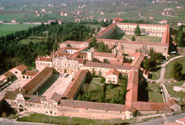
Church and Dominican Convent of Santa Maria delle Grazie with "The Last Supper" by Leonardo da Vinci
Province of Milano, Lombardy
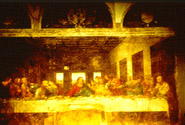
The refectory of the Convent of Santa Maria delle Grazie forms an integral part of this architectural complex, begun in Milan in 1463 and reworked at the end of the 15th century by Bramante. On the north wall is The Last Supper, the unrivalled masterpiece painted between 1495 and 1497 by Leonardo da Vinci, whose work was to herald a new era in the history of art.
Cilento and Vallo di Diano National Park with the Archeological sites of Paestum and Velia, and the Certosa di Padula
Province of Salerno, Campania
The Cilento is an outstanding cultural landscape. The dramatic groups of sanctuaries and settlements along its three east–west mountain ridges vividly portray the area's historical evolution: it was a major route not only for trade, but also for cultural and political interaction during the prehistoric and medieval periods. The Cilento was also the boundary between the Greek colonies of Magna Graecia and the indigenous Etruscan and Lucanian peoples. The remains of two major cities from classical times, Paestum and Velia, are found there.
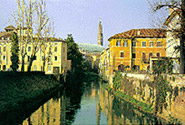
City of Vicenza and the Palladian Villas of the Veneto
Provinces of Padua, Rovigo, Treviso, Venice, Verona and Vicenza, Veneto Region
Founded in the 2nd century B.C. in northern Italy, Vicenza prospered under Venetian rule from the early 15th to the end of the 18th century. The work of Andrea Palladio (1508–80), based on a detailed study of classical Roman architecture, gives the city its unique appearance. Palladio's urban buildings, as well as his villas, scattered throughout the Veneto region, had a decisive influence on the development of architecture. His work inspired a distinct architectural style known as Palladian, which spread to England and other European countries, and also to North America.
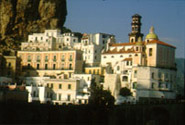
Costiera Amalfitana
Province of Salerno, Campania
The Amalfi coast is an area of great physical beauty and natural diversity. It has been intensively settled by human communities since the early Middle Ages. There are a number of towns such as Amalfi and Ravello with architectural and artistic works of great significance. The rural areas show the versatility of the inhabitants in adapting their use of the land to the diverse nature of the terrain, which ranges from terraced vineyards and orchards on the lower slopes to wide upland pastures.
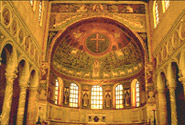
Early Christian Monuments of Ravenna
City and Province of Ravenna, Emilia-Romagna Region
Ravenna was the seat of the Roman Empire in the 5th century and then of Byzantine Italy until the 8th century. It has a unique collection of early Christian mosaics and monuments. All eight buildings – the Mausoleum of Galla Placidia, the Neonian Baptistery, the Basilica of Sant'Apollinare Nuovo, the Arian Baptistery, the Archiepiscopal Chapel, the Mausoleum of Theodoric, the Church of San Vitale and the Basilica of Sant'Apollinare in Classe – were constructed in the 5th and 6th centuries. They show great artistic skill, including a wonderful blend of Graeco-Roman tradition, Christian iconography and oriental and Western styles.
Etruscan Necropolises of Cerveteri and Tarquinia
Provinces of Rome and Viterbo, Region of Latium
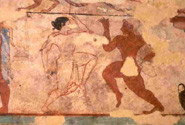
These two large Etruscan cemeteries reflect different types of burial practices from the 9th to the 1st century BC, and bear witness to the achievements of Etruscan culture. Wich over nine centuries developed the earliest urban civilization in the nothern Mediterranean. Some of the tombs are monumental, cut in rock and topped by impressive tumuli (burial mounds). Many feature carvings on their walls, others have wall paintings of outstanding quality. The necropolis near Cerveteri, known as Banditaccia, contains thousands of tombs organized in a city-like plan, with streets, small squares and neighbourhoods. The site contains very different types of tombs: trenches cut in rock; tumuli; and some, also carved in rock, in the shape of huts or houses with a wealth of structural details. These provide the only surviving evidence of Etruscan residential architecture. The necropolis of Tarquinia, also known as Monterozzi, contains 6,000 graves cut in the rock. It is famous for its 200 painted tombs, the earliest of which date from the 7th century BC.
Ferrara, City of the Renaissance, and its Po Delta
City and Province of Ferrara, Emilia-Romagna Region
Ferrara, which grew up around a ford over the River Po, became an intellectual and artistic centre that attracted the greatest minds of the Italian Renaissance in the 15th and 16th centuries. Here, Piero della Francesca, Jacopo Bellini and Andrea Mantegna decorated the palaces of the House of Este. The humanist concept of the 'ideal city' came to life here in the neighbourhoods built from 1492 onwards by Biagio Rossetti according to the new principles of perspective. The completion of this project marked the birth of modern town planning and influenced its subsequent development.
Genoa: Le Strade Nuove and the system of the Palazzi dei Rolli
Liguria Region, Genoa Province
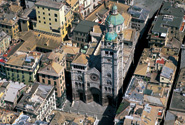
The Strade Nuove and the system of the Palazzi dei Rolli, in Genoa's historic centre (late 16th and early 17th centuries) represent the first example in Europe of an urban development project with a unitary framework, where the plans were specially parcelled out by a public authority and a particular system of ‘public lodging', based on legislation. The Rolli palaces were residences built by the wealthiest and most powerful aristocratic families of the Republic of Genoa at the height of its financial and seafaring power. The site includes an ensemble of Renaissance and Baroque palaces along the so-called ‘new streets' (Strade Nuove). The grand residence palaces erected on the Strada Nuova (now Via Garibaldi) in the late 16th century, formed the quarter of the nobility, who under the constitution of 1528, had assumed the government of the Republic. Palaces are generally three or four stories high and feature spectacular open staircases, courtyards, and loggias overlooking gardens, positioned at different levels in a relatively tight space. The influence of this urban design model is evidenced by Italian and European literature over the following decades. The palazzi offer an extraordinary variety of different solutions, achieving universal value in adapting to the particular characteristics of the site and to the requirements of a specific social and economic organization. They also offer an original example of a network of public hospitality houses for visits of state, as decreed by the Senate in 1576. The owners of these palazzi were obliged to host state visits, thus contributing to the dissemination of knowledge of an architectural model and a residential culture which attracted famous artists and travellers, and of which a significant example is a collection of drawings by Pieter Paul Rubens.
|
Nuova Doel Chioggia
Podere Albanaia Chiusi
Narooma Ciampino,
Ostello Casale Dei Monaci Ciampino,
Park Hotel Ciampino
Camping La Sfinge Cinque Terre,
Cinque Terre Holidays Cinque Terre,
La Dolce Vita Cinque Terre,
La Dolce Vita Apartment Cinque Terre,
Ostello Tramonti Cinque Terre,
Villaggio Turistico La Francesca Cinque Terre
B&B Casamica Civitavecchia,
B&B Susanna Civitavecchia
La Fonte Collepietro
In Riva al Lago Como,
Locanda Milano 1873 Como,
Mini Hotel Baradello Como
Serra d' Urso Park Conflenti
Casa Valentina-Cortona Cortona,
Hotel Corys Cortona
Hotel Aigle Courmayeur
Mickeyhouse Cropani Marina,
Torre del Golfo Cropani Marina
Hotel City Desenzano del Garda,
Hotel Enrichetta Desenzano del Garda
Hotel Tschurtschenthaler Dobbiaco
Talking Stones B&Bm Dolceacqua
Albergo alla Campana Dolo
Kaire B&B Erice
B&B Poeta Este
La Giara Etna
Villa Rosa Feltre
Vacation Home Green Umbria Ferentillo
Antica Corte Charme Residence Hotel Ferrara,
Hotel Antico Casale Ferrara,
Hotel Nettuno Ferrara,
Hotel Suite Duomo Ferrara,
Residenza Delizia Estense Ferrara
Hotel Riviera Fiumicino,
L'Oasi Hotel Residence Fiumicino,
La barba di Giove Fiumicino
5 Star hostel Florence,
A Casa di Dante B&B Florence,
A&A - Bed and Breakfast Florence,
Abatjour B & B Florence,
Alberghino Florence,
Albergo Cinzia Florence,
Albergo Paola Florence,
Aldini Hotel Florence,
Alex House Florence,
Aline Hotel Florence,
Alloro B&B Florence,
Althea Rooms Florence,
Antica Posta Florence,
Antiche Armonie Florence,
Archi Rossi Hostel Florence,
Art Bed & Breakfast Florence,
Auto Park Hotel Florence,
B&B Cinquesensi Florence,
B&B Florentia Florence,
B&B Four Rooms Florence,
B&B Maison Florence,
B&B Manuela Florence,
B&B Olga's House Florence,
B&B Rifredi Florence,
B&B Villa La Sosta Florence,
Bed & Bed Peterson Florence,
Bed & Breakfast La Martellina Florence,
Bed & Breakfast Leopoldo Florence,
Bed & Breakfast Vecchia Firenze Florence,
Bed and Breakfast Il Bargello Florence,
BedandBed House Florence,
Belmondo Tourist House Florence,
Benivieni Hotel Florence,
Camping Village Il Poggetto Florence,
Campos Soggiorno Florence,
Canto de' Nelli Florence,
Casa Cimabue Florence,
Casa di Barbano Florence,
Casa Pucci B&B Florence,
Casa Rovai Guest House Florence,
Castello Apartments Florence,
Central Beds Florence,
Cimarosa Residence B&B Florence,
Cimatori Bed and Breakfast Florence,
DanyHouse Florence,
Danyhouse- Floralia Florence,
DanyHouseDue Florence,
David Inn Florence,
Domus Florentiæ Hotel Florence,
Donatello Bed&Breakfast Florence,
Emerald Fields Florence,
Ester Hotel Florence, Florence,
Eurostudent home Florence,
Ferretti Florence,
Firenze-Castelfiorentino Florence,
Florence, Room B&B Florence,
Franchi Residence Florence,
Franz House Florence,
Gemini Studio Florence,
Gilda B&B Florence,
Guest House S.Ambrogio Florence,
Historical Apartment Florence,
Holiday Rooms Florence,
Home in Florence, B&B Florence,
Hostel Veronique Florence,
Hostel Ghibellina Florence,
Hostel Greci Florence,
Hostel Santa Monaca Florence,
Hostel Sette Santi Florence,
Hotel Accademia Florence,
Hotel Alamanni Florence,
Hotel Alinari Florence,
Hotel Andrea Florence,
Hotel Anna's Florence,
Hotel Argentina-Firenze Florence,
Hotel Ariston Florence, Florence,
Hotel Azzi Florence,
Hotel Balcony Florence,
Hotel Bavaria Florence,
Hotel Beatrice Florence,
Hotel Bellettini Florence,
Hotel Benvenuti Florence,
Hotel Bigallo Florence,
Hotel Bijou Florence,
Hotel Bretagna Florence,
Hotel Caravaggio Florence,
Hotel Cardinal of Florence, Florence,
Hotel Careggi Florence,
Hotel Casa Lea Florence,
Hotel Centro Florence,
Hotel Collodi Firenze Florence,
Hotel Colomba Florence,
Hotel Colorado Florence,
Hotel Concorde Florence,
Hotel D'Azeglio Florence,
Hotel da Verrazzano Florence,
Hotel de Lanzi Florence,
Hotel Deco Florence,
Hotel Derby - Florence,
Hotel Donatello Florence,
Hotel Duca d'Aosta Florence,
Hotel Emma-Florence, Florence,
Hotel Enza Florence,
Hotel Etrusca Florence,
Hotel Fiorita Florence,
Hotel Garden Florence,
Hotel Gavinana Florence,
Hotel Giappone Florence,
Hotel Gioia Florence,
Hotel Giotto Florence,
Hotel Golf Florence,
Hotel Guelfa Florence,
Hotel Kursaal & Ausonia Florence,
Hotel Leopolda Florence,
Hotel Lorenzo il Magnifico Florence,
Hotel Masaccio Florence,
Hotel Maxim Florence,
Hotel Merlini Florence,
Hotel Monica Florence,
Hotel Montreal-Firenze Florence,
Hotel Morandi alla Crocetta Florence,
Hotel Nella Florence,
Hotel Nizza Florence,
Hotel Palazzo Vecchio Florence,
Hotel Palazzuolo Florence,
Hotel Privilege Florence,
Hotel Regina-Firenze Florence,
Hotel Romagna Florence,
Hotel Royal Florence, Florence,
Hotel Sampaoli Florence,
Hotel San Lorenzo Florence,
Hotel San Marco Florence,
Hotel Santa Croce Florence,
Hotel Sofia Florence,
Hotel Souvenir Florence,
Hotel Spagna Florence,
Hotel Tina Florence,
Hotel Toscana Florence,
Hotel Veneto Florence,
Hotel Villa Gabriele D'Annunzio Florence,
I Cherubini Florence,
I Parigi B&B Florence,
Il Ghiro Guesthouse Florence,
International Student House Florence, Florence,
La Fortezza Florence,
La Spiga Florence,
Leonardo House Florence,
Locanda Daniel Florence,
Locanda David Florence,
Locanda Gallo Florence,
Locanda Latina Florence,
Locanda Pitti Florence,
Locanda Starlight Florence,
Lucia Freda Florence,
Luna Rossa Florence,
Maison de Charme Florence,
Marignolle Relais & Charme Florence,
Mary's House Florence,
Montartino-Villa Le Piazzole Florence,
My Friends Florence,
NinnaNanna B&B Florence,
Novella Inn Florence,
Ostello Gallo D'Oro Florence,
Pensione Canada Florence,
PLP Guesthouse Florence,
Plus Camping Michelangelo Florence,
Plus Camping Tourist Village Girasole Club Florence,
Podere Le Cave Florence,
Polihotels Palazzo Ognissanti Florence,
Proconsolo Rooms Florence,
Pucci Suites Florence,
Quadra Key Residence Florence,
Rayan Palace Hotel Florence,
Relais B&B Novecento Florence,
Relais Cavalcanti Florence,
Relais del Duomo Florence,
Relais Florence, Florence,
Relais il Campanile Florence,
Relais Il Cestello Florence,
Residence S.Niccolò Florence,
Residenza Apostoli Florence,
Residenza Belli Guest House Florence,
Residenza Cantagalli Florence,
Residenza dei Pucci Florence,
Residenza Giulia B&B Florence,
Residenza il Maggio Florence,
Residenza La Torricella Florence,
Residenza Vespucci Florence,
Ridolfi Guest House Florence,
Rooms with a View Florence,
San Frediano Mansion Florence,
Sandra B&B Florence,
ShortStop Florence,
Soggiorno Berlini Florence,
Soggiorno Burchi Florence,
Soggiorno Gloria Florence,
Soggiorno La Pergola Florence,
Soggiorno Leone X° Florence,
Soggiorno Livi Florence,
Soggiorno Luciani Florence,
Soggiorno Madrid Florence,
Soggiorno Michelangelo Florence,
Soggiorno Pitti Florence,
Soggiorno Prestipino Florence,
Soggiorno Primavera Florence,
Soggiorno Santa Reparata Florence,
Tourist House Florence,
Tourist House Liberty Florence,
Tourist House Santa Croce Florence,
Veb Consult Guesthouse Florence,
Villa Ulivi Florence,
Villino la Magnolia Florence,
Wanda Hotel Florence,
Youth Hostel Villa Camerata Florence
Ostello Pierantoni Foligno
Air Hotel Forli,
B&B Il Prato Forli,
B.& B.Giorgio Forli,
Le Magnolie Forli
Baiera B&B Frascati
MilleQuattrocento B&B Gaeta
Il Centro Storico di Villa Elisabetta Galatina,
Villa Elisabetta Country-house Galatina
B&B Sosta a Levante Gallipoli,
VacanzeParadiso Gallipoli
Villaggio Camping Delle Rose Gatteo Mare
Bed & Breakfast Maura Genoa,
Bed & Breakfast Red House Genoa,
Blue B&B Genoa,
Essiale B&B Genoa,
Flair House B&B Genoa,
Hotel Agnello D'Oro Genoa,
Hotel Assarotti Genoa,
Hotel Balbi Genoa,
Hotel Bellevue Genova Genoa,
Hotel Cairoli Genoa,
Hotel Galles Genoa,
Hotel Helvetia-Genoa Genoa,
Hotel Viale Sauli Genoa,
Hotel Vittoria Genoa,
I Capricci Genoa,
Locanda di Palazzo Cicala Genoa,
Maura Apartment Genoa,
Mini Hotel Genoa,
Persimmon Genoa,
YHA Ostello per la Gioventu Genoa Genoa
Hotel Palladio Giardini Naxos,
That's Amore Bed and Breakfast Giardini Naxos
Gelsomino Etna Giarre
B&B Casa dei vespri Gibellina
Casprini Da Omero Greve in Chianti
Camping Village Le Marze Grosseto
Mariletta Resort Grosseto Roccatederighi
Agriturismo Villa Vittoria Guardavalle
Hotel Bosone Palace Gubbio,
Hotel Gattapone Gubbio
Villa Ambrosina Impruneta
Hotel Imperamare Ischia,
La Rotonda Sul Mare Ischia,
Poggio del Sole Ischia,
Ring Hostel Ischia
Cà del Rì Iseo,
VeraIseo Iseo
La Casa del Melograno Isole Eolie
Ripabianca Jesi
Monte Selva Hotel L' Aquila
Locanda La Pergola La Spezia
Casa Vela Lake Maggiore,
Hotel Britannia Excelsior Lake of Como,
Hotel Regina-Gravedona Lake of Como
Agriturismo Macesina Lake of Garda
B&B Ca' Cipriani Lake of Garda,
Hotel Bellariva Lake of Garda,
Hotel Europa Lake of Garda,
Hotel Gardenia & Villa Charme Bardolino Lake of Garda,
Hotel San Benedetto Lake of Garda,
La Finestra Sul Fiume Lake of Garda,
La Passeggiata Lake of Garda,
Relais San Michele Lake of Garda
La Mimosa Lake of Iseo
Agriturismo Le Carolee Lamezia Terme,
Agriturismo Trigna Lamezia Terme,
Camping Case Vacanza Lungomare Lamezia Terme,
Piccolo Hotel LT Lamezia Terme
The Lance Castle Lanciole
Aceri B&B Lanuvio
Aranceto Lecce,
B&B Centro Storico Lecce Lecce,
B&B La Scisa Lecce,
B&B Macchia di Pele Lecce,
B&B San Matteo Lecce,
Bed & Breakfast Cavallino Lecce,
Bed & Breakfast La Piazzetta Lecce,
Bed & Breakfast Villa Giuliana Lecce,
Dimora Barocca Lecce,
I Paradisi Lecce,
Inn Centro Lecce,
Mirage Lecce,
Palazzo Rollo Lecce,
Scorrano House Lecce,
Vico del Sole B Lecce
Hotel Florida Lerici Lerici
Hotel Aaritz Levico Terme,
Hotel Cristallo Levico Terme
Hotel Marco Polo Lido di Jesolo Lido di Jesolo,
Hotel Terramare Lido di Jesolo
Hotel Neri Lipari,
Hotel Villa Diana Lipari
Hotel Ariston Livorno Livorno,
Hotel Giappone Inn Livorno
Hotel Nappini Lizzano in Belvedere
Al Tuscany Antica Residenza Lucca,
Albergo Villa Marta Lucca,
Alla Dolce Vita Lucca,
B&B Centro Storico Lucca,
Bed and Breakfast Sunrise Lucca,
Bed&Breakfast L'Arancio Lucca,
Casa dell'Angelo Lucca,
Corte di Re Artù Lucca,
Da Carlos Lucca,
Da Elisa Alle Sette Arti Lucca,
Dreamers B&B Lucca,
Guest House San Frediano Lucca,
Hotel Gina Lucca,
La Torre 1 Lucca,
Leone di Sant' Anna Lucca,
Lucca in Villa Lucca,
Ostello San Frediano Lucca,
Relais San Lorenzo Lucca,
Residence Santa Chiara Lucca,
Rest In Lucca Lucca,
Sogni d'Oro Lucca
Domu e Luna B&B Lunamatrona
Il Sorger del Sole Macerata,
Shambala Country House Macerata,
Villa Sibillini Country House Macerata
Vacanze Salento Maglie
Costantino Farm House Maida
Malpensa House Malpensa,
Villa Monterosa Malpensa
Ostello Apuano Marina di Massa
Agrimar - Agriturismo Massa Lubrense
Casale Villarena Massa Lubrense
Casale Le Ghiandaie Massarella
D'Angelo Palace Hotel Mazara del Vallo,
Sporting Club Village Mazara del Vallo
Hotel Westend Merano
B&B Palazzetto Merate
Sir John Mercato San Severino
Scilla e Cariddi Messina
Morena B & B Mestre
Amaca Meta di Sorrento,
Villa Pollio Meta di Sorrento,
Villino Castellano Meta di Sorrento
B&B Ernestina Miane
Montupoli B&B Miglianico
ABC Hotel Milan,
Adelchi Hotel Milan,
Ambrosiana Hotel Milan,
B&B il Girasole Milan,
Bed&Bed Milan Milan,
Bernina Hotel Milan,
Catalani & Madrid Milan,
City Hotel Central Station Milan,
Comfort Hotel & Suites Pasteur Milan,
Eurohotel Milan,
Green House Hotel Milan,
Hostel Verona Milan,
Hotel 22 Marzo Milan Milan,
Hotel Aladin Milan,
Hotel Ambra Milan,
Hotel Arco Milan Milan,
Hotel Arno Milan,
Hotel Auriga Milan,
Hotel Aurora Milan,
Hotel Bogart Milan,
Hotel Bonola Milan,
Hotel Brasil Milan,
Hotel Brivio Milan,
Hotel Ca' Grande Milan,
Hotel Casa Mia Milan,
Hotel Charly Milan,
Hotel Chopin Milan,
Hotel Dateo Milan,
Hotel De Albertis Milan,
Hotel del Corso Milan,
Hotel Del Sud Milan,
Hotel Delizia Milan,
Hotel Delle Nazioni Milan,
Hotel Demo Milan,
Hotel Diablo Milan,
Hotel Dorè Milan,
Hotel Dover Milan,
Hotel Due Giardini Milan,
Hotel Durante Milan,
Hotel Edolo Milan,
Hotel Edy Milan,
Hotel Ideale Milan,
Hotel La Pace Milan
Hotel Laguna Blu Milan,
Hotel Lario Milan,
Hotel Le Querce Milan,
Hotel Lugano Milan,
Hotel Mac Mahon Milan
Hotel Majestic - of San Giuliano Milanese Milan,
Hotel Mec Milan,
Hotel Medusa Milan Milan,
Hotel Monopole Milan,
Hotel Napoli Milan,
Hotel New Milan Milan,
Hotel Nuovo Metro Milan,
Hotel Oriente Milan,
Hotel Paradiso Milan,
Hotel Piola Milan,
Hotel Royal Milan,
Hotel Sabatino Milan Milan,
Hotel Salus Milan,
Hotel San Tomaso Milan,
Hotel Sara Milan,
Hotel Serena Milan,
Hotel Siro Milan,
Hotel Stazione Milan,
Hotel Teco Milan,
Hotel Terminal Milan,
Hotel Trentina Milan,
Hotel Trieste Milan,
Hotel Vallazze Milan,
Hotel Valley Milan,
Hotel Vecchio Convento Milan ,
Hotel Vienna Milan,
Hotel Zefiro Milan,
La Residenza Milan,
Rent Room Zara Milan,
The Best Hotel Milan,
Youth Hostel Piero Rotta Milan
B&B Mira Buse Mira
B&B Casa Della Maestà Modena,
YHA Ostello San Filippo Neri Modena,
Modica City Center Modica
CLICK FOR MORE HOSTELS IN ITALY (A - G)
CLICK FOR MORE HOSTELS IN ITALY (M - S)
CLICK FOR MORE HOSTELS IN ITALY (S - Z)
|
|
|
Where to stay in
Italy
Chioggia
Chiusi
Ciampino
Cinque Terre
Civita Castellana
Civitavecchia
Collepietro
Como
Conflenti
Controguerra
Cortona
Courmayeur
Cropani Marina
Deiva Marina
Desenzano del Garda
Dobbiaco
Dolceacqua
Dolo
Erice
Este
Etna
Falcade
Feltre
Ferentillo
Ferrara
Fiumicino
Florence
Foligno
Forli
Forte dei Marmi
Frascati
Furore
Gaeta
Galatina
Gallipoli
Gatteo Mare
Genoa
Giardini Naxos
Giarre
Gibellina
Greve in Chianti
Grosseto
Grosseto Roccatederighi
Guardavalle
Gubbio
Impruneta
Ischia
Iseo
Isola Rossa
Isole Eolie
Jesi
L' Aquila
La Spezia
Lake Maggiore
Lake of Como
Lake of Garda
Lake of Iseo
Lake Trasimeno
Lamezia Terme
Lanciole
Lanuvio
Lecce
Lecce Vernole
Lerici
Levico Terme
Lido di Jesolo
Lipari
Livorno
Lizzano in Belvedere
Lovere
Lucca
Lunamatrona
Macerata
Magliano Sabina
Maglie
Maida
Maiori
Malpensa
Mantignana
Marina di Massa
Marina di Pietrasanta
Marina Romea
Massa Lubrense
Massarella
Mazara del Vallo
Merano
Merate
Mercato San Severino
Messina
Mestre
Meta di Sorrento
Miane
Miglianico
Milan
Mira
Modena
Modica
|
|